
AIS-140 GPS Mandate for Trucks
What AIS-140 requires from Indian truck owners, why the VLTD is now tied to permit renewal, what a compliant device really costs, and what it cannot do.

Lokesh R
CEO of Trucks India
Created 11 September 2026 · 5 min read
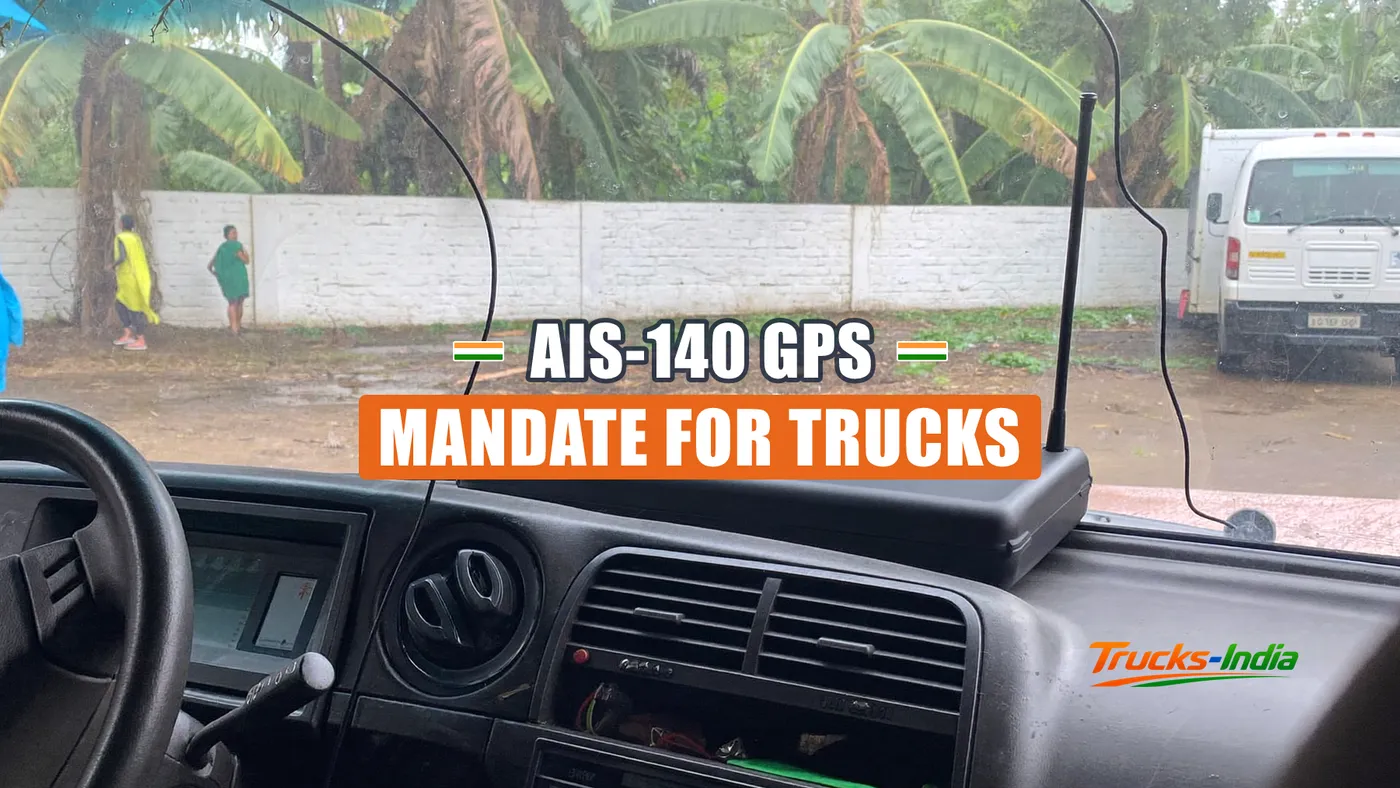
Most owners meet AIS-140 the same way: they go to renew a permit and are told the vehicle needs a tracking device first.
That is the part worth understanding. AIS-140 is not a separate inspection you can put off. Permit issue and renewal now depend on it, so a vehicle without a compliant device is a vehicle whose permit runs out and does not come back.
What AIS-140 actually is
AIS-140 is an Automotive Industry Standard that sets the technical specification for vehicle tracking in Indian public and commercial transport. The device it describes is a VLTD, a Vehicle Location Tracking Device.
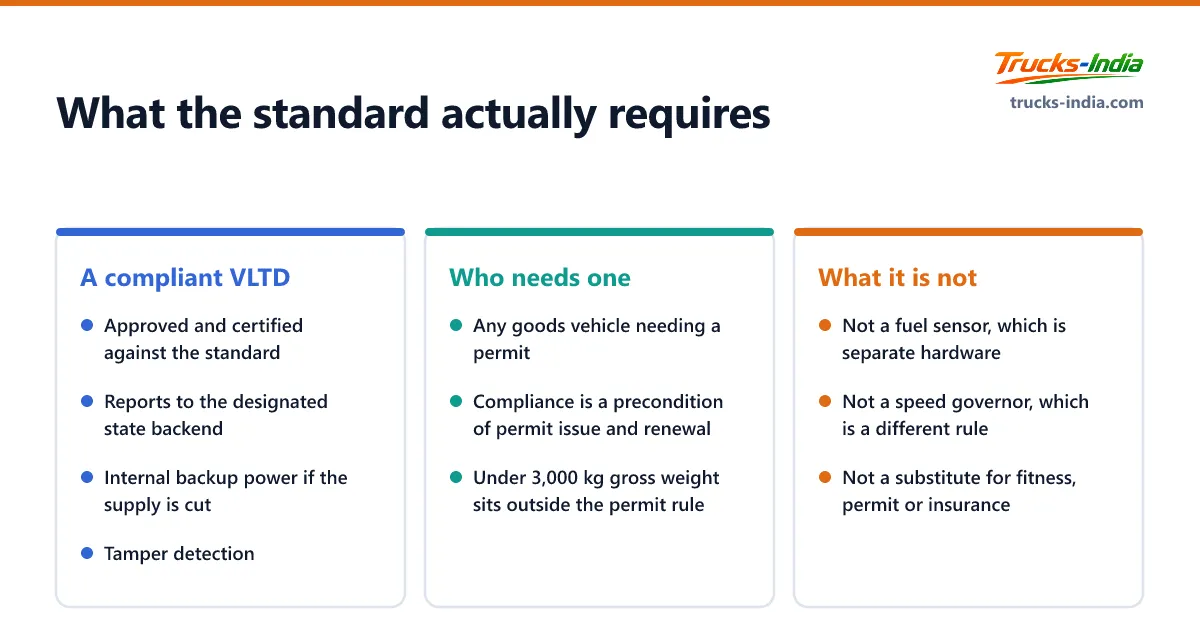
It is not a consumer GPS tracker with a different name. A compliant VLTD has to be approved and certified against the standard, it reports to the designated state backend rather than only to a private app, it carries internal backup power so it keeps reporting if the vehicle's supply is cut, and it has tamper detection.
That last set of features is why a cheap tracker off a marketplace does not satisfy the rule. The point of the standard is a device that cannot be quietly switched off.
Who needs one
The position as it now stands: transport permits, whether national, state or district level, require AIS-140 compliance as a precondition for issue and renewal.
That is the practical test for a goods vehicle owner. If your vehicle needs a permit, it needs the device. If your vehicle is exempt from the permit requirement, which under Section 66(3) of the Motor Vehicles Act means a gross vehicle weight not exceeding 3,000 kg, the question does not arise in the same way.
Public service vehicles were brought in first, and goods vehicles on national permits followed. States have run their own phase-ins with their own deadlines and their own lists of empanelled suppliers, which is why the answer to "does my truck need it" genuinely differs between two operators in different states running identical vehicles.
Check your own state transport department's notification. This is not a case where a national summary settles it.
What it costs
States that empanelled suppliers also notified prices, and the figures that emerged were in the range of a few thousand rupees for the device, excluding GST, plus fitment.
Beyond the hardware there is usually a recurring subscription for the SIM and the data platform. That is the cost owners underestimate, because it is small monthly and continuous. Ask for it in writing before buying, and ask what happens to the subscription if you sell the vehicle.
Where a state has empanelled suppliers, buying from one of them is the safe route. A device that is technically compliant but not recognised by your state's backend will still fail you at the permit counter.
What it does for you, honestly
Compliance is the reason you are fitting it. But the data is real and most owners never use it.
Where the vehicle actually is, without phoning the driver.
Route and stop history, which settles disputes with clients about delivery times and settles questions about unexplained detours.
Idling time, which is a direct fuel cost and one of the few levers in the mileage guide that costs nothing to pull.
Evidence when you need it. A tracking record placing the vehicle elsewhere is the cleanest way to contest a wrongly issued challan, as the challan guide covers.
If you are paying the subscription anyway, look at the reports. The fuel and downtime insight is worth more than the compliance is.
What it does not do
Worth being clear, because sales pitches blur these.
It is not a fuel sensor. A VLTD tracks location. Fuel level monitoring and theft detection are a separate sensor and a separate cost, which the diesel theft guide covers.
It is not a speed governor. Tracking may record speed; it does not limit it. The limiter is a different device under a different rule, covered in the speed governor guide.
It does not replace a fitness certificate, a permit or insurance. It is a condition attached to the permit, not a substitute for anything.
Getting it done without wasting a trip
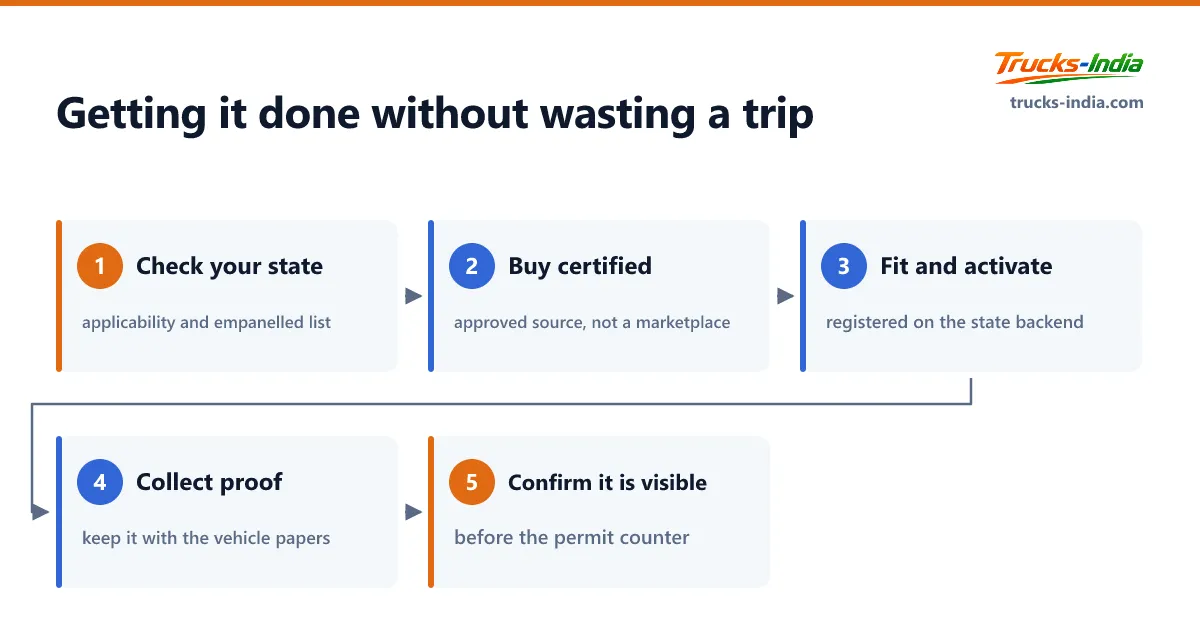
- Check your state's notification for applicability and for the empanelled supplier list.
- Buy a certified device from an approved source, not a marketplace.
- Get it fitted and activated, with the device registered to your vehicle on the state backend. Activation is the step people miss: a fitted device that is not reporting is not compliance.
- Collect the certificate or proof of fitment, and keep it with the vehicle papers.
- Confirm it is visible to the authority before you go to renew the permit, rather than finding out at the counter.
Step five saves a wasted day more often than any other.
Frequently asked questions
In practical terms yes for any goods vehicle that needs a permit, because AIS-140 compliance is now a precondition for issuing and renewing national, state and district permits. Vehicles exempt from the permit requirement, meaning a gross vehicle weight not exceeding 3,000 kg, sit outside that.
A Vehicle Location Tracking Device, the device type specified by AIS-140. It must be certified against the standard, report to the designated state backend, carry internal backup power so it continues reporting if the vehicle supply is cut, and include tamper detection.
No. A consumer tracker does not meet the standard and, just as importantly, may not be recognised by your state's backend. Where a state has empanelled suppliers, buy from that list, because a technically compliant device the state cannot see will still fail you at the permit counter.
States that empanelled suppliers notified prices in the range of a few thousand rupees excluding GST, plus fitment. Budget also for the recurring SIM and platform subscription, which is the cost owners tend to overlook because it is small and continuous.
Neither. It tracks location and may record speed. Fuel level monitoring is a separate sensor at separate cost, and speed limiting is a different device under CMVR Rule 118.
The permit becomes the problem. Since compliance is a precondition for issue and renewal, a vehicle without a recognised working device eventually loses its permit and cannot legally operate, regardless of everything else being in order.
Where this fits
The device is now tied to your permit. See our guide to the national permit for trucks.
Compliance follows the vehicle class you run. Trucks India lists gross weight, payload and price for every model in India.
Call +91 93422 00875About the author
Lokesh R
CEO of Trucks India
Lokesh R is the founder of Trucks India, an independent heavy-vehicle marketplace and research platform operated from Chennai, Tamil Nadu, founded in 2025. Under his direction, Only Heavy publishes specifications and prices sourced from manufacturers, authorised dealer price lists and official regulatory schedules, with every model page checked by a named reviewer, prices re-verified monthly and after any GST revision, and no advertiser able to buy a rating, ranking or comparison result.


