
National Permit for Truck in India
National permit for goods vehicles in India: the consolidated fee, the annual authorisation owners miss, which trucks are exempt, and how to apply now.

Lokesh R
CEO of Trucks India
Created 9 September 2026 · 7 min read
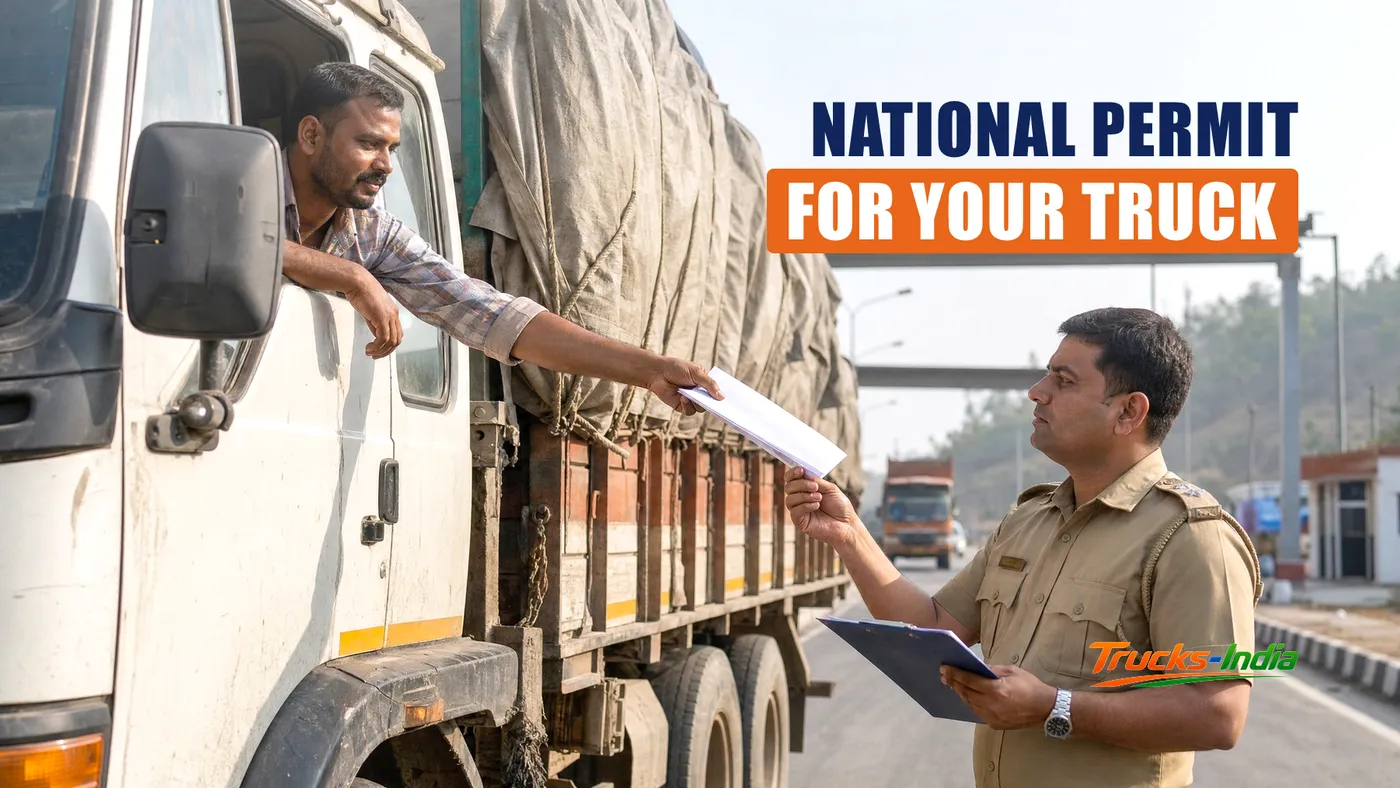
The most expensive misunderstanding in Indian goods transport is the belief that a national permit lasts five years.
The permit does. The authorisation that makes it work does not. It runs for one year, and a vehicle whose authorisation has lapsed is not legally authorised to carry goods across a state border, whatever the date printed on the permit says. Operators discover this at a check post, mid trip, with a load on the back.
This guide covers what the permit is, what it costs, which vehicles need one at all, and the renewal that catches people out.
Which permit you need
A goods carriage carrying goods for hire or reward needs a permit. Which one depends on where it works.
- A state permit, sometimes called a goods carriage permit, covers operation within the issuing state and any state named on it.
- A national permit covers the whole country, which is why it is also called an all India permit.
If your work is genuinely regional and stays inside one state, the state permit is cheaper and sufficient. The national permit is for vehicles that cross borders, and it is the one worth taking if interstate work is even occasionally on your route plan, because arranging it after the fact costs you the trip.
Which vehicles need no permit at all
This exemption is real, it is statutory, and it saves small operators a recurring cost.
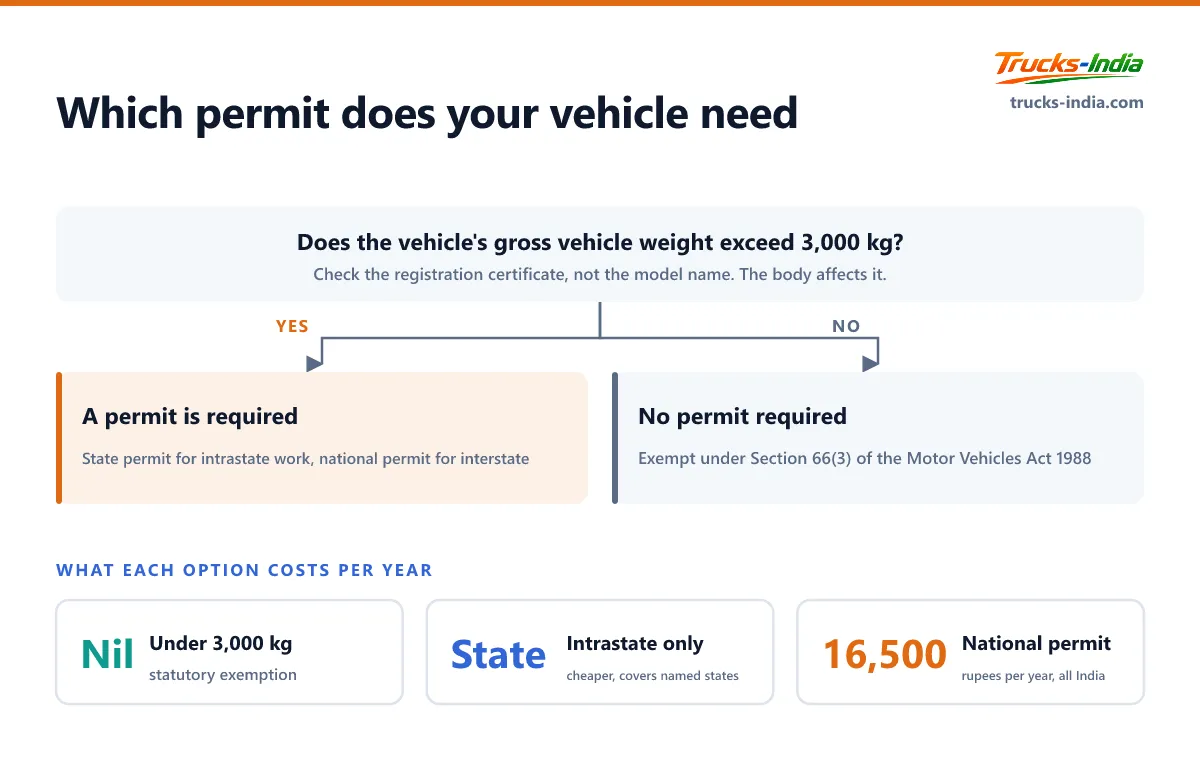
Under Section 66(3) of the Motor Vehicles Act 1988, goods vehicles with a gross vehicle weight not exceeding 3,000 kg are exempt from the requirement to hold a permit. The exemption has been confirmed in court, including a Kerala High Court ruling that the absence of a permit on such a vehicle cannot be treated as a breach of insurance policy conditions.
In practice that covers most of the small commercial vehicle and pickup segment. If your vehicle sits under that weight, the permit question does not apply to you at all. Check the gross vehicle weight on the registration certificate rather than assuming from the model name, because body building can move a vehicle across the line.
Everything else in this guide is for vehicles above 3,000 kg.
What a national permit costs
The fee structure has four parts, and only one of them recurs annually. That is the part people misjudge.
Paid once:
- Application fee, Rs 50
- Permit fee, Rs 2,000, covering the five year permit
Paid every year:
- Consolidated fee under Rule 87(2), Rs 16,500
- Authorisation fee in Form 46, Rs 1,000
The consolidated fee of Rs 16,500 per annum under Rule 87(2) of the Central Motor Vehicles Rules is the substantial number, and it is what replaced the old arrangement of paying separate taxes to each state you entered. That single payment is distributed between the states, which is the whole point of the national permit: one fee instead of a dozen.
Older guides quote Rs 15,000 for this fee. That figure is superseded. If a page still shows it, check its other numbers before relying on them.
State level charges and any goods tax your home state levies sit on top of these, so confirm the total with your own RTO before budgeting.
The five year permit and the one year authorisation
Here is the distinction that costs operators money.
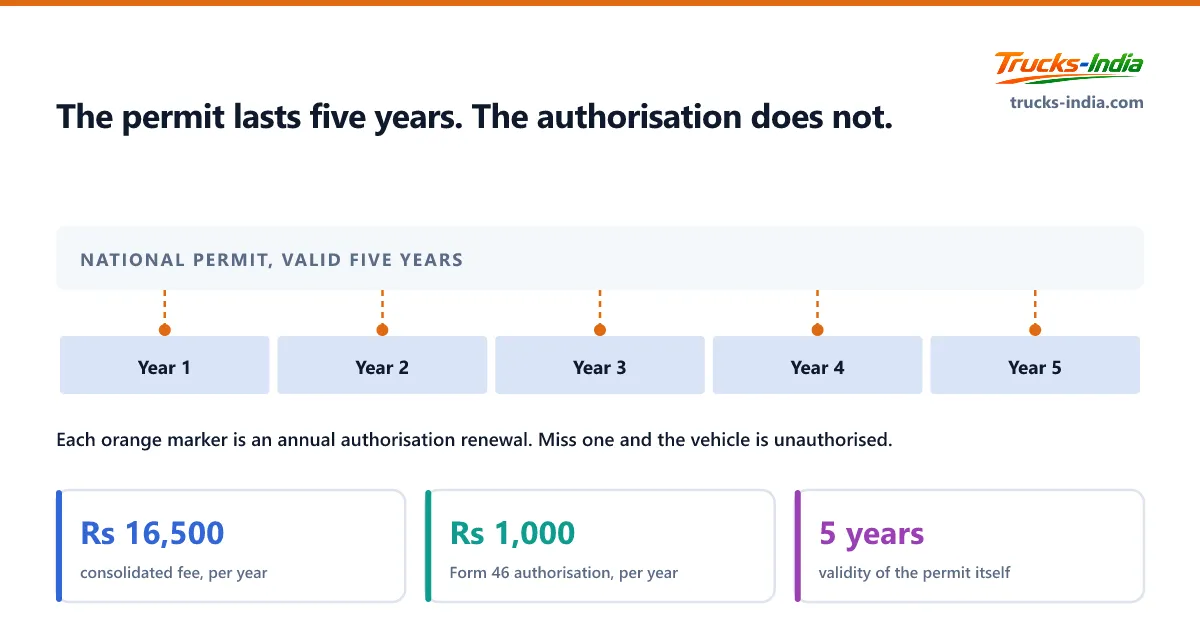
National permit validity for a truck is two numbers, not one. The permit issued under the national permit scheme is valid for five years from grant or renewal.
The authorisation to actually operate under it is valid for one year, and must be renewed annually by paying the consolidated fee and the Form 46 fee again.
So a truck can be holding a perfectly valid permit and still be unauthorised, because the authorisation attached to it expired eight months ago. At a check post the authorisation is what is checked. The consequence is a penalty and a stopped vehicle, and if an incident occurs while unauthorised, an insurer has grounds to question the claim.
Put the authorisation renewal in the same calendar as the fitness certificate, the insurance and the pollution certificate. It is the one most often forgotten because its cycle does not match the permit it belongs to.
Documents and forms
The two forms that matter are Form 48, the application for the grant of a national permit, and Form 46, the application for the authorisation.
Alongside them, expect to produce:
- The vehicle's registration certificate
- A valid fitness certificate
- Valid insurance
- A valid pollution under control certificate
- PAN of the owner or the business
- Proof of payment of the consolidated fee
- For a company or firm, the constitution documents
Nothing here is unusual, but all of it must be current on the day of application. A fitness certificate that expires next week will hold up the file.
Applying and renewing
National permit work is handled through the Parivahan Sewa portal, and the authorisation renewal can be done online without a visit to the RTO in most states. You can also check a vehicle's permit status on the portal using the registration number and the last five characters of the chassis number, which is worth doing before you buy a used truck.
The practical sequence for a new vehicle is:
- Register the vehicle as a commercial goods carriage at the RTO
- Obtain the fitness certificate
- Apply in Form 48 for the national permit
- Apply in Form 46 for the authorisation and pay the consolidated fee
- Diary the authorisation renewal date for eleven months later
Step five is not administrative housekeeping. It is the step that keeps the vehicle earning.
When a national permit is not worth it
The consolidated fee is a real annual cost and it is the same whether the truck crosses a border every week or twice a year.
If your work is genuinely intrastate, a state permit costs less and does the job. The moment interstate runs become regular, the national permit is cheaper than arranging state by state clearances and far cheaper than turning down the work.
The honest test is how many interstate trips you expect in a year and what each one earns. If the answer is fewer than a handful and the margins are ordinary, the state permit is the correct choice for now. Nothing stops you upgrading later.
The guide to getting loads is worth reading alongside this, because the permit decision follows from the work you can actually win rather than the other way round.
Frequently asked questions
The consolidated fee under Rule 87(2) is Rs 16,500 per year, plus Rs 1,000 a year for the Form 46 authorisation. The permit itself costs Rs 2,000 for five years with a Rs 50 application fee. State charges may apply on top. Older pages quoting Rs 15,000 for the consolidated fee are out of date.
The permit is valid for five years. The authorisation that lets you operate under it is valid for only one year and must be renewed annually. A vehicle with a current permit but a lapsed authorisation is not authorised to run.
Goods vehicles with a gross vehicle weight not exceeding 3,000 kg are exempt under Section 66(3) of the Motor Vehicles Act. Check the gross vehicle weight on the registration certificate rather than assuming from the model, because the body affects it.
A state permit allows operation within the issuing state and any states named on it. A national permit allows operation throughout India under a single consolidated fee instead of separate payments to each state. The national permit costs more and is worth it once interstate work is regular.
Through the Parivahan Sewa portal, by filing Form 46 again and paying the consolidated fee and authorisation fee for the coming year. In most states the renewal is completed online. Diary it eleven months after the last renewal rather than waiting for a reminder.
Registration certificate, fitness certificate, insurance, pollution under control certificate, PAN, proof of the consolidated fee payment, and the constitution documents if the owner is a firm or company. Form 48 applies for the permit and Form 46 for the authorisation. All documents must be current on the application date.
Where this fits
The permit is the last step before a truck can legally earn. See our guide to starting a transport business.
A national permit is only worth its fee if the vehicle earns across states. Trucks India lists payload, mileage and on road price for every model sold in India.
Call +91 93422 00875About the author
Lokesh R
CEO of Trucks India
Lokesh R is the founder of Trucks India, an independent heavy-vehicle marketplace and research platform operated from Chennai, Tamil Nadu, founded in 2025. Under his direction, Only Heavy publishes specifications and prices sourced from manufacturers, authorised dealer price lists and official regulatory schedules, with every model page checked by a named reviewer, prices re-verified monthly and after any GST revision, and no advertiser able to buy a rating, ranking or comparison result.


